 Sector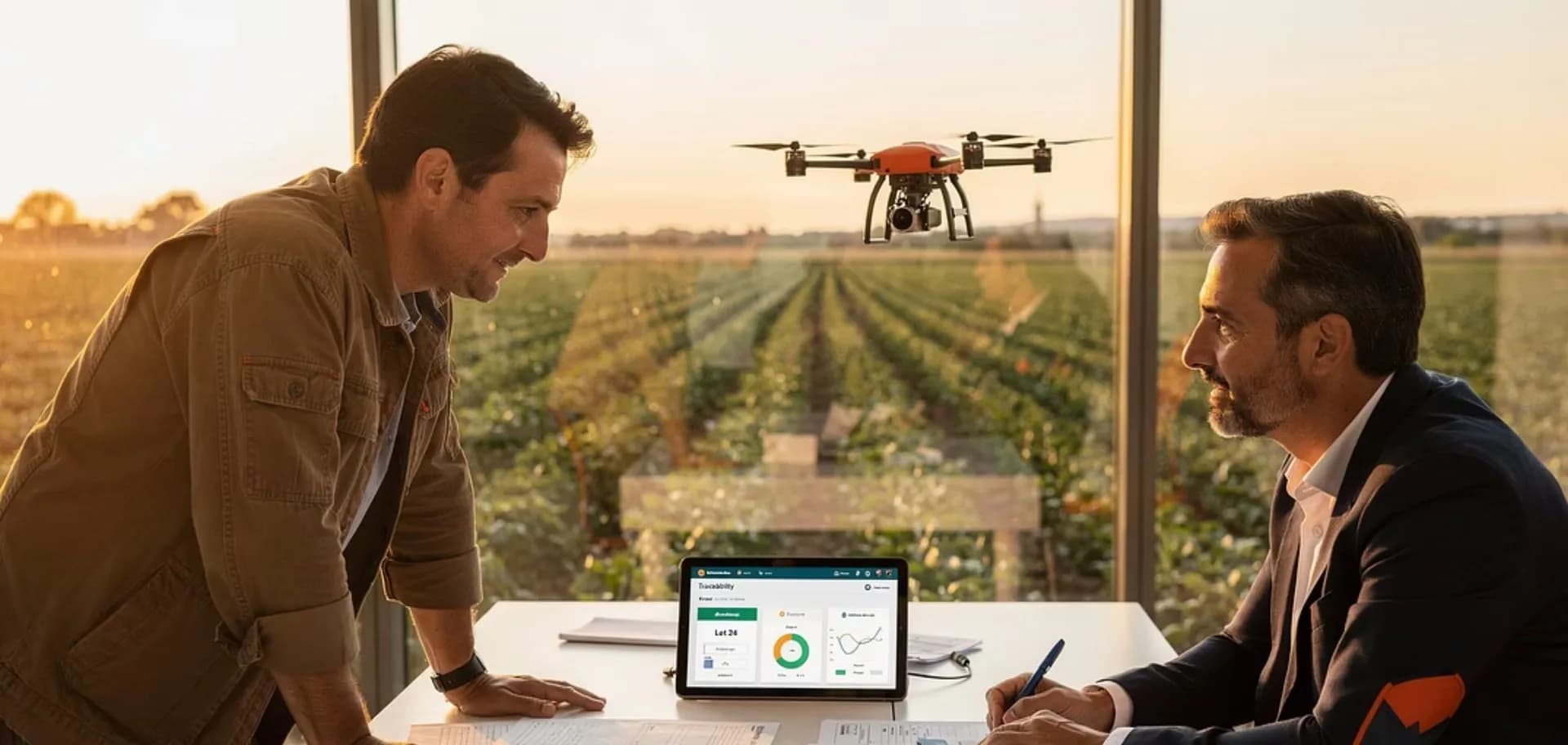
Sector
Agricultural grants in Spain 2026: PAC, PERTE Agroalimentario and FEADER
BY TECNOCIM INNOVA PUBLISHED ON 23 MARCH 2026
Spain's agri-food sector has one of the widest grant ecosystems in the economy. Between the PAC (Política Agrícola Común, the Common Agricultural Policy), the PERTE Agroalimentario with €300 million behind it (planderecuperacion.gob.es, 2024), FEADER grants for modernising farm holdings and the CDTI innovation programmes, companies in the sector can reach public funding at practically every stage of the value chain — from primary production through to processing and marketing.
The grant map for the agri-food sector
PAC 2023-2027: direct payments and rural development
The PAC Strategic Plan (PEPAC) 2023-2027 organises the support into two pillars:
Pillar 1 — Direct payments (FEAGA):
- Basic income support for sustainability
- Complementary redistributive support
- Complementary support for young farmers
- Eco-schemes: payments for farming practices that benefit the environment
- Coupled support for strategic sectors (livestock, protein crops, nuts)
Pillar 2 — Rural development (FEADER):
- Modernisation of farm holdings (machinery, buildings, irrigation)
- Setting up young farmers (up to €70,000 depending on the region)
- Investment in agri-food processing and marketing
- Agri-environment and climate: payments for sustainable practices
- Areas with natural constraints: compensation for difficult growing conditions
PAC deadline for 2026: applications for direct payments are normally filed between February and April each year through each Spanish region's paying agency. According to MAPA figures (Ministerio de Agricultura, Pesca y Alimentación, 2025), Spain receives more than €5 billion a year in PAC direct payments, making it one of the EU's main beneficiaries.
What changes in the PAC in 2026:
- Eco-schemes carry more weight: practices such as crop rotation, cover crops and precision agriculture receive extra payments
- A closer link with social conditionality: complying with employment law becomes a condition for receiving support
- Gradual administrative simplification: less paperwork in the annual applications
Do you need guidance on PAC support? Request a free assessment and we will tell you which lines fit your holding or your agri-food business.
PERTE Agroalimentario: innovation and industry
The PERTE Agroalimentario is the Next Generation funds instrument built for this sector, with €300 million in grants and loans. It has three lines:
| Line | Focus | Maximum funding per company |
|---|---|---|
| Agri-food R&D&I | Innovative projects in processes, products and quality | Up to €4M |
| Sustainability and energy efficiency | Environmental and energy investment | Up to €4M |
| SME investment | Modernisation and digitalisation of agri-food SMEs | Up to €4M |
Who can apply: trading companies, cooperatives and sociedades agrarias de transformación (SAT, the Spanish agricultural processing company form) with industrial agri-food activity.
Thematic priorities: circular economy and eco-innovation, food quality and safety, digital technologies applied to the food chain, and cutting food waste.
FEADER grants for modernising farm holdings
Spain's regional governments manage the FEADER modernisation grants, with sizeable budgets:
- Aragon: €28 million (€15M for modernisation plus €13M for young farmers)
- Extremadura: €22 million for modernisation
- Castilla y León: annual calls to improve productive structures
- Andalusia: modernisation grants with extended application windows
- The Balearic Islands: call open from March to May 2026
Eligible investment: farm machinery, livestock buildings, efficient irrigation systems, stores, greenhouses, renewable energy systems for own use, precision agriculture technology, and monitoring and sensor systems.
Grant intensity: it varies by region and by the profile of the beneficiary, but the usual reference is 30–50% of the eligible cost for farmers in general, with up to 20% on top for young farmers, areas with natural constraints and operations with a positive environmental impact.
FEADER grants can be combined with the Social Security contribution reductions for hiring, which lets farm holdings pair upgraded facilities with incentives for rural employment.
What innovation grants can an agri-food company apply for?
Beyond the sector schemes, agri-food companies can reach the general innovation ecosystem in Spain:
- CDTI grants (PID, LIC): for R&D projects on production processes, new products, smart traceability and AI applied to the food chain
- R&D&I tax deductions: developing new agri-food processes qualifies as R&D (25–42%) or as technological innovation (12%)
- Contribution reductions for research staff: a 40–50% cut in Social Security contributions for technicians working on agri-food R&D
- Kit Digital: digitalisation of management (ERP, traceability, electronic invoicing)
- FUNDAE-funded training: upskilling the team in digital technologies and applied AI
In Catalonia, agri-food companies can combine these with the ACCIÓ programmes, the Cupons ACCIÓ for innovation and international expansion assessments, and the specific ICAEN support for energy efficiency in agro-industrial facilities.
An example for an agri-food cooperative in Catalonia: an ACCIÓ strategy voucher (€8,000) to define the innovation plan, a CDTI PID grant to develop the smart traceability system, R&D&I tax deductions on all the development spending, Social Security contribution reductions for the technician hired for the project, and a FEADER grant to modernise the processing plant. The combined return can exceed 50% of the total investment.
Did you know that the agri-food sector is one of the 5 priority sectors in the CDTI Misiones for AI R&D? Projects applying artificial intelligence to the food chain have dedicated funding. Find out more →
How do you apply for agri-food grants?
The process follows the usual grant application stages, with a few quirks of its own:
- Find the call: check MAPA (mapa.gob.es), Red PAC (redpac.es), the regional paying agencies and Canal Empresa in Catalonia
- Check eligibility: PAC support requires registration in the Spanish farm registers; PERTE support requires industrial agri-food activity
- Prepare the paperwork: project report, budget, holding certificates, environmental permits
- File on time: PAC deadlines are strict (February to April); FEADER and PERTE vary by call
- Deliver and report: the investment has to be made within the eligibility period and evidenced with invoices and certificates
Mistakes specific to this sector:
- Not keeping the holding registers up to date
- Starting the investment before the grant is awarded
- Failing the environmental requirements (animal welfare conditions, plant health rules)
- Confusing PAC direct payments with FEADER investment grants
Trends that are opening new funding opportunities:
- Precision agriculture: sensors, drones, GPS and data analysis to optimise inputs and yields — fundable through CDTI and Kit Digital
- Blockchain traceability: a transparent food chain from field to consumer — qualifies as technological innovation
- Alternative proteins: developing new food products — eligible for PERTE and R&D&I grants
- Cutting the carbon footprint: offsetting emissions and regenerative agriculture — fundable through energy efficiency grants and the Cupons ACCIÓ Green line for carbon footprint calculations
- Food e-commerce: direct-to-consumer sales (D2C) — fundable through Kit Digital
A fractional CFO who knows the sector can run the PAC, FEADER and PERTE applications and the innovation tax deductions at the same time, making sure the company maximises every source of funding open to it.
Do you want to reach every grant open to your agri-food company? At Tecnocim Innova we combine sector grant management with R&D&I tax deductions and contribution reductions. Contact us for a no-obligation review.
Related services
Agri-Food Grants
Funding for the food industry: PERTE Agroalimentario, FEADER, CDTI and regional funds. Spain is the 4th largest...
View service →Grant Management
We identify, apply for and report on public grants for your company, with more than 30 years of experience.
View service →Request a free assessment
Free assessment for companies with revenue above €500,000
Get grant and tax deduction updates by email
Calls, deadlines and regulatory changes, once a month.
farming grantsagricultural grantslivestock grantsgrants to modernise farm holdings
Related articles
Sector