 Digital Transformation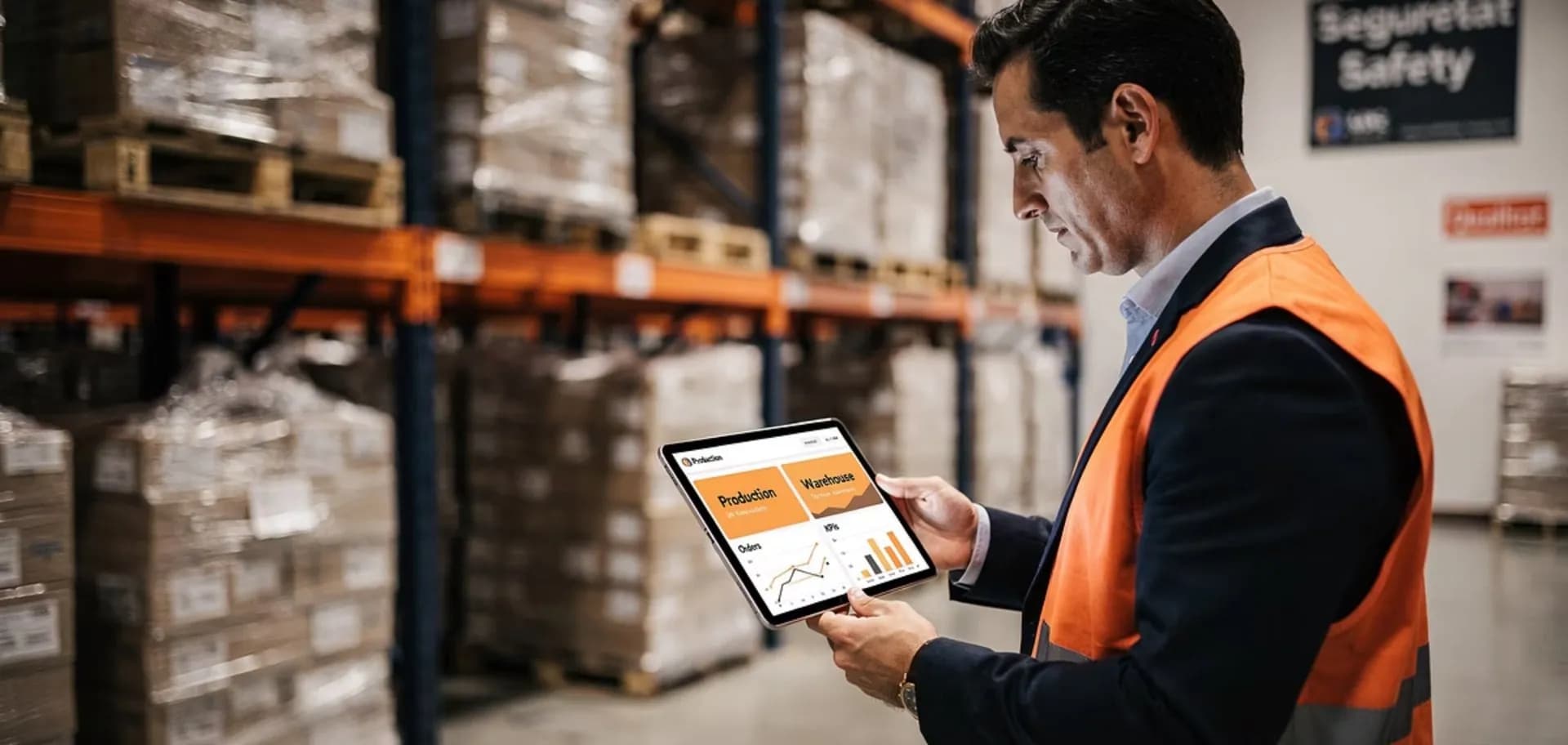
Digital Transformation
ERP for SMEs: how to choose one and fund it with grants
BY TECNOCIM INNOVA PUBLISHED ON 23 MARCH 2026 · UPDATED ON
Implementing an ERP in an SME costs between €6,000 and €200,000 depending on the complexity of the business (Navertia, 2026). With Kit Digital grants (up to €29,000 for medium-sized companies) and the ACCIÓ Industria 4.0 vouchers (up to €20,000), however, a Spanish SME can cover a significant share of the investment. The key is to choose the right ERP for your size and sector before you apply for the grant.
What is an ERP and why does your SME need one?
An ERP (Enterprise Resource Planning) is business management software that brings every process together on a single platform: accounting, invoicing, purchasing, sales, warehouse, production, projects and human resources. Instead of running each area with separate tools (Excel, invoicing programs, inventory spreadsheets), an ERP centralises the information and automates processes.
Signs that your SME needs an ERP:
- Financial information is scattered across multiple spreadsheets
- Errors in invoicing, inventory or orders happen often
- You cannot produce up-to-date management reports without spending hours on them
- Coordination between departments (sales, purchasing, production) is manual
- Business growth has outgrown your current tools
Measurable benefits of an ERP:
- Fewer administrative errors and less duplicated data
- Real-time visibility of your financial and operational position
- Automation of repetitive processes (invoicing, reconciliation, reporting)
- Better decision-making based on integrated data
- Easier regulatory compliance (electronic invoicing, SII, GDPR)
Does your SME need an ERP? Request a free assessment and we will point you to the solution that best fits your business.
How do you choose the right ERP for your SME?
Before comparing options, set these selection criteria:
1. Size and complexity of the business
| Company profile | Recommended ERP | Indicative cost |
|---|---|---|
| Self-employed / micro (1–5 employees) | Holded, Contasimple | €30–100/month |
| Services SME (5–20 employees) | Holded, Odoo, a3ERP | €100–500/month |
| Industrial SME (10–50 employees) | Odoo, SAP Business One, Sage 200 | €500–2,000/month |
| Growing SME (50–250 employees) | SAP Business One, Microsoft Dynamics, Sage X3 | €1,000–5,000/month |
2. Cloud vs on-premise
SMEs usually go for cloud solutions because of the lower upfront investment, the maintenance included and access from anywhere. On-premise ERPs require investment in servers, licences and maintenance staff, but they offer more customisation and more control over the data.
3. Key features for Spanish SMEs
- Accounting and tax: adapted to Spanish rules (SII, tax returns, electronic invoicing)
- Invoicing: compliance with the Ley Antifraude (the Spanish anti-fraud law) and mandatory electronic invoicing
- Purchasing and sales: orders, delivery notes, automatic invoicing
- Inventory and warehouse: stock control, traceability, location management
- Production (where relevant): manufacturing orders, planning, materials consumption
- HR: payroll, time tracking, absence management
4. Fit with Spanish regulation
One criterion that really sets solutions apart in Spain is how well they fit tax and employment rules: the SII real-time reporting system, mandatory electronic invoicing (Ley Antifraude), tax returns, payroll under the applicable collective agreement and time tracking. International ERPs (Odoo, SAP, Dynamics) need a Spanish localisation, while the domestic ones (a3ERP, Sage 50) include it as standard.
5. Scalability and total cost of ownership
Do not choose on the monthly price alone. Consider the total cost: licences, implementation, training, data migration, customisation and annual support. A cheap ERP badly implemented can cost more than a premium one properly integrated.
Common mistakes when choosing an ERP:
- Choosing on price without assessing the real needs of the business
- Not involving key users in the selection process
- Underestimating the time and cost of migrating data from the old systems
- Failing to plan team training (the main cause of failed implementations)
- Buying unnecessary modules that add complexity without adding value
- Not checking that the supplier or implementation partner is approved for Kit Digital before signing
Leading ERPs for SMEs in Spain (2026)
| ERP | Ideal profile | Strengths | Implementation cost |
|---|---|---|---|
| Holded | Self-employed and micro-SMEs | Simple, all-in-one, low cost | €1 – €1,000 |
| Odoo | Flexible SMEs | Modular, open source, highly customisable | €3,000 – €15,000 |
| a3ERP (Wolters Kluwer) | Spanish SMEs | Built for Spanish rules, local support | €1,000 – €10,000 |
| Sage 50/200 | Growing SMEs | Complete ecosystem, robust accounting | €5,000 – €30,000 |
| SAP Business One | Industrial SMEs | Power, scalability, integration | €15,000 – €50,000 |
| Microsoft Dynamics 365 BC | SMEs running Office 365 | Microsoft integration, BI included | €10,000 – €40,000 |
Did you know that implementing an ERP can be funded through Kit Digital? Up to €6,000 for Segment I (10–49 employees) and up to €29,000 for medium-sized companies. See how →
How do you fund an ERP implementation with grants?
There are several ways to fund the implementation in full or in part:
1. Kit Digital (Red.es)
The Kit Digital programme includes a "Gestión de procesos" (process management) category that funds ERP implementation directly:
| Segment | Employees | Maximum grant |
|---|---|---|
| Segment I | 10–49 | €6,000 |
| Segment II | 3–9 | €6,000 |
| Segment III | 0–2 | €3,000 |
| Segment IV | 50–99 | €25,000 |
| Segment V | 100–249 | €29,000 |
Requirement: the solution has to be contracted with an agente digitalizador approved by Red.es.
2. ACCIÓ Industria 4.0 vouchers (Catalunya)
- Diagnostic voucher: up to €8,000 to define your digital transformation roadmap
- Implementation voucher: up to €20,000 to integrate 4.0 technologies (ERP included)
Calls linked to digital transformation that can cover ERP implementation projects as part of wider business digitalisation.
Training your team on the new ERP can be funded with the company's annual FUNDAE credit.
Steps to implement an ERP with a grant
- Assessment: review your needs, current processes and digitalisation priorities
- ERP selection: compare options against business criteria, not price alone
- Apply for the grant: Kit Digital (self-assessment at acelerapyme.gob.es) or ACCIÓ vouchers
- Choose the implementation partner: approved by Red.es for Kit Digital, accredited by ACCIÓ for the vouchers
- Data migration: plan the move from your current systems, cleaning the data first
- Team training: train key users with FUNDAE credit
- Go-live and follow-up: intensive support for the first few weeks, with an incident plan and a stabilisation period of 1–3 months
Typical implementation time: between 2 and 6 months for an SME, depending on the complexity of the business and the number of modules. Cloud solutions such as Holded can be up and running in days, while a SAP Business One or Dynamics project can take 4–6 months.
A fractional CFO can lead the whole selection and implementation process, making sure the ERP aligns with the company's financial strategy and that every available grant is used.
Do you want to implement an ERP with grant funding? At Tecnocim Innova we help you choose the right solution and manage the digitalisation grants from Kit Digital and ACCIÓ, alongside digital transformation consultancy. Contact us for a no-obligation review.
Related service
Request a free assessment
Free assessment for companies with revenue above €500,000
Get grant and tax deduction updates by email
Calls, deadlines and regulatory changes, once a month.
erp for smeserp smesbusiness management softwareerp implementation grant
Related articles
Digital Transformation Digital Transformation